
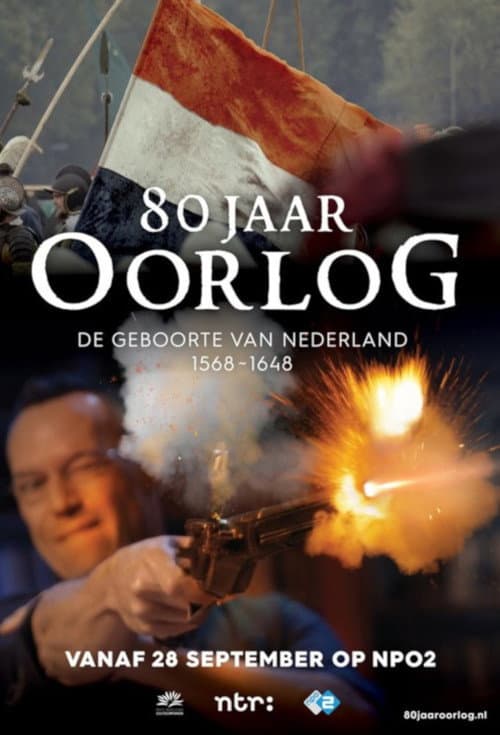
80 Years of War
★ 0.0•2018•1 Seasons•
DocumentaryWar & Politics
At the end of the 16th century, Dutch subjects revolted against legitimate Spanish rule. What starts with the discontent of a minority grows into a war that will last more than a lifetime. From Groningen to Brussels, from Den Briel to Groenlo, the battle erupts everywhere. And often that struggle has a strangely modern appearance. Terrorism, propaganda, executions, radicalization, shock and awe; all themes that can easily be found in the war that was fought from 1568 to 1648. In a 7-part television series, the NTR will bring the stories about the 80-year war that can be found all over the country from September 28, every Friday at 9.05 pm on NPO 2. And Hans Goedkoop oversees the battlefield with experts.
Top Cast

Hans Goedkoop
Presentator
Episodes
No Preview
1. Foreplay
45mIn 1568 the Counts Egmont and Van Horne are beheaded on the market in Brussels. It is the provisional conclusion of the escalating tensions between the nobles in the Netherlands and our monarch Philip II of Spain. And the beginning of a war that would last eighty years. The struggle is about power and freedom of belief. A nun's diary provides a dramatic picture of the Iconoclasm, Egmont's skull is examined to see if his face has been further damaged after his beheading and the search for Van Horne's grave in Weert ends for the time being in the courtyard of a monastery.
Aired: 9/28/2018No Preview
2. Terror
45mRecommended TV Shows










Similar TV Shows







Reviews (0)
Sign in to share your thoughts with the community.